free app for traking food calories link here
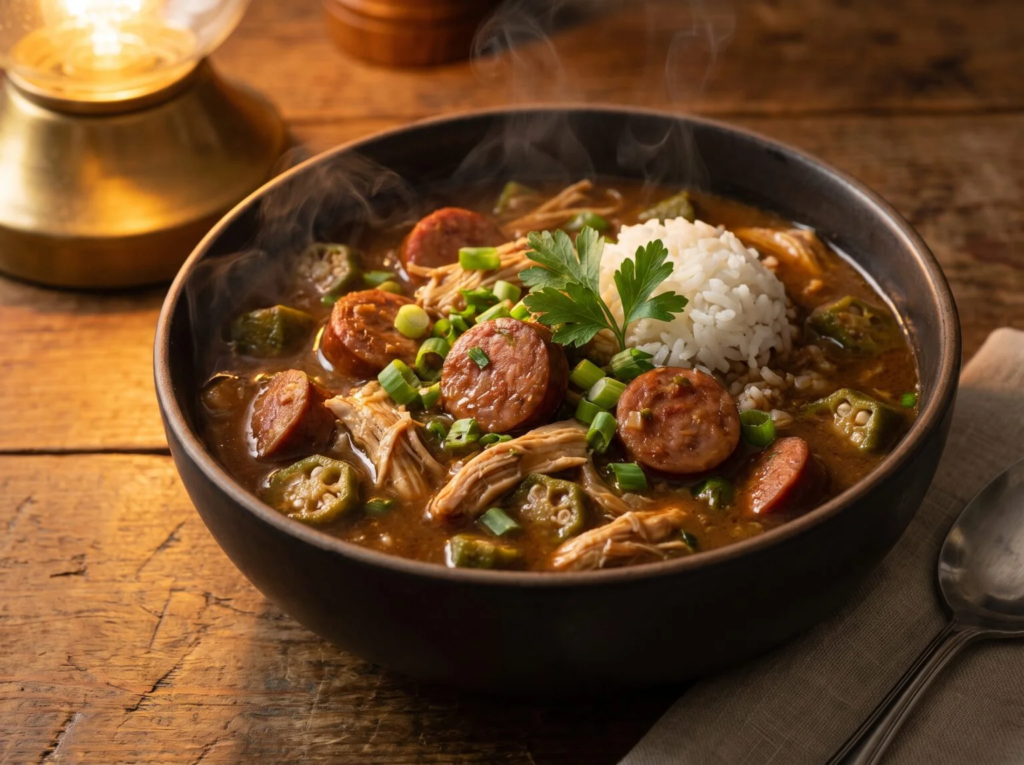
Gumbo captures Louisiana’s layered culinary history better than almost any other dish — a stew built from West African cooking techniques, French roux-making, Spanish seasoning, and Native American filé powder, all simmered together into something that belongs entirely to South Louisiana. The name likely comes from a West African word for okra, reflecting the influence of enslaved West African cooks, while French settlers contributed the slow-cooked roux that forms the backbone of most gumbo today. Ask ten cooks for their recipe and you’ll get ten different, fiercely defended answers.
What You’ll Need
- ½ cup vegetable oil
- ½ cup all-purpose flour
- 1 onion, 2 celery stalks, 1 green bell pepper, diced
- 4 cloves garlic, minced
- 12 oz andouille sausage, sliced
- 1½ lbs boneless chicken thighs, cut into pieces
- 6 cups chicken stock
- 1 cup sliced okra, or 1 teaspoon filé powder
- 2 bay leaves
- 1 tablespoon Cajun seasoning
- Salt and cayenne, to taste
- Cooked white rice, green onions, and parsley, for serving
How to Make It
- Heat the oil, whisk in the flour, and cook the roux, stirring constantly, for 30–45 minutes until deep chocolate-brown. Don’t rush this step.
- Add the onion, celery, bell pepper, and garlic; cook 5–7 minutes until softened.
- Add the sausage and cook a few minutes more.
- Gradually whisk in the stock. Add chicken, bay leaves, and Cajun seasoning. Simmer, uncovered, 45 minutes to an hour.
- Stir in okra during the last 20 minutes, or stir in filé powder off the heat right before serving.
- Adjust seasoning, remove bay leaves, and serve over rice with green onions and parsley.
Tips for a Better Gumbo
The roux is the make-or-break element — keep the heat moderate and stir often, since a burnt roux can’t be salvaged. Use okra or filé, not both, or the texture gets overly thick. Like most stews, gumbo tastes even better the next day, once the flavors have had time to deepen.
Leave a Reply