Category: All-American Classic Desserts

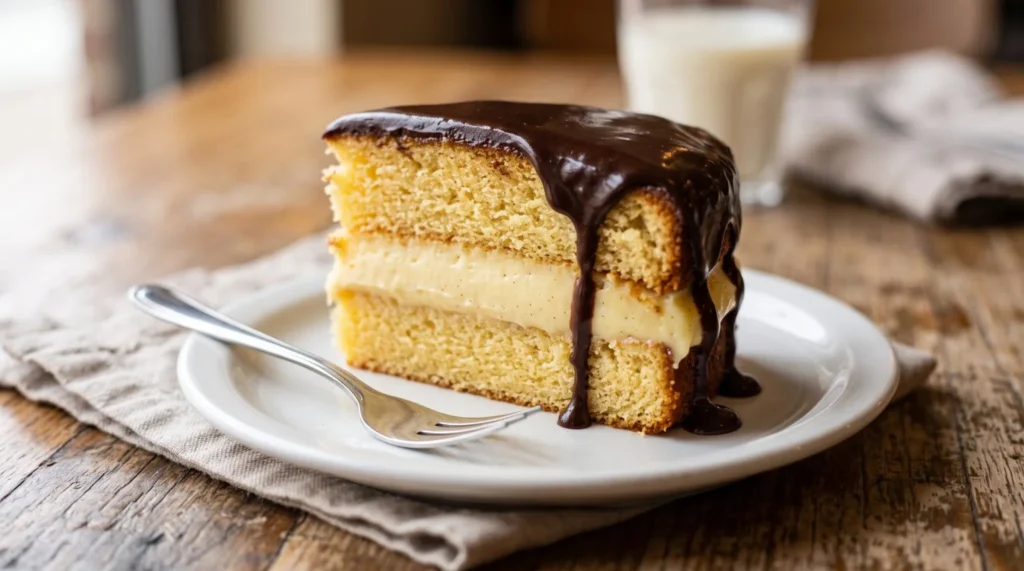
  • Boston Cream Pie: Massachusetts’ Official Dessert (That’s Actually a Cake)

    free app for traking food calories link here

    Despite its name, Boston cream pie isn’t a pie at all — it’s two layers of sponge cake filled with vanilla custard and topped with a glossy chocolate glaze. The confusion dates back to the 1800s, when cakes and pies were often baked in the same pans and the names were used somewhat interchangeably. The dessert is credited to a French chef at Boston’s Parker House Hotel in 1856, and it became popular enough that Massachusetts named it the official state dessert in 1996.

    What You’ll Need

    For the cake:

    • 1½ cups all-purpose flour
    • 1½ teaspoons baking powder
    • ½ teaspoon salt
    • ½ cup unsalted butter, softened
    • 1 cup sugar
    • 2 eggs
    • 1 teaspoon vanilla extract
    • ¾ cup milk

    For the filling and glaze:

    • 2 cups milk
    • ½ cup sugar
    • ¼ cup cornstarch
    • 4 egg yolks
    • 1 teaspoon vanilla extract
    • 4 oz semisweet chocolate, chopped
    • ½ cup heavy cream

    How to Make It

    1. Cream the butter and sugar, beat in the eggs and vanilla, then alternate adding the flour mixture and milk. Divide between two greased 8-inch round pans and bake at 350°F for 20–25 minutes. Cool completely.
    2. For the custard, whisk the milk, sugar, cornstarch, and egg yolks in a saucepan over medium heat until thickened. Stir in vanilla, then chill.
    3. Place one cake layer on a plate, spread the custard on top, and add the second layer.
    4. Warm the cream, pour over the chopped chocolate, and stir until smooth. Pour the glaze over the top of the cake, letting it drip down the sides.

    Tips for a Better Boston Cream Pie

    Make sure the custard is fully chilled before assembling, or it will slide out from between the layers. Pour the glaze while it’s still warm and pourable for the smoothest, glossiest finish.
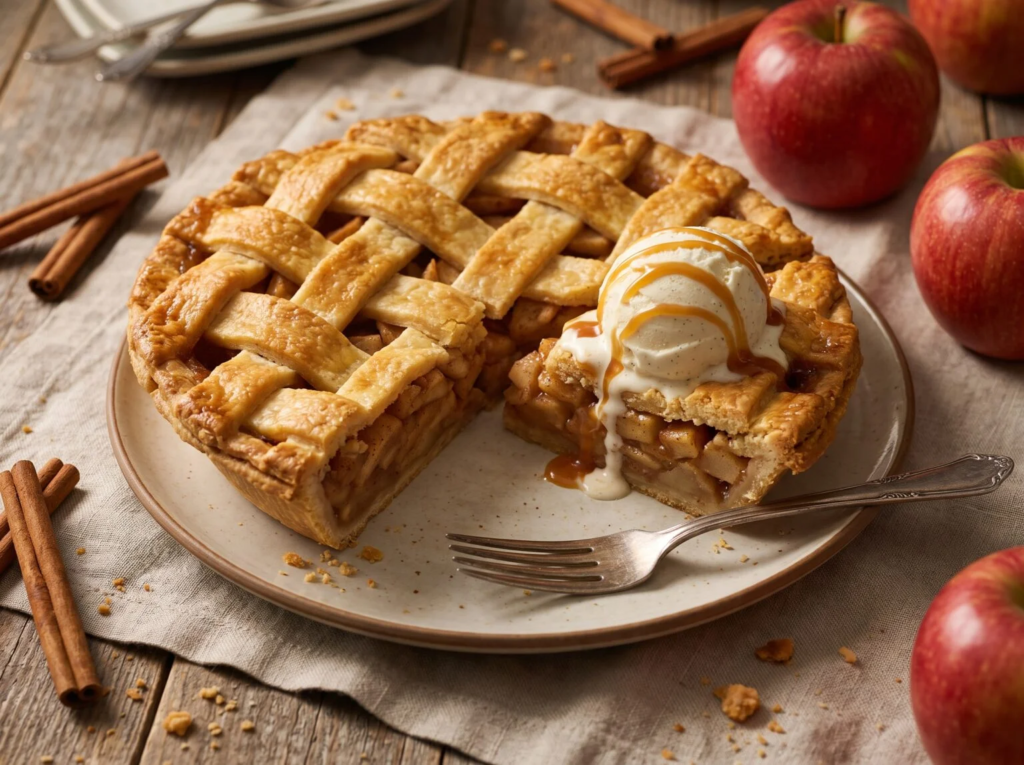
  • Classic Apple Pie: As American As It Gets

    free app for traking food calories link here

    The phrase “as American as apple pie” is so familiar it’s easy to forget the dish didn’t originate in America at all — apples aren’t native to North America, and pie-making came over with English and Dutch settlers. What America did was turn it into a symbol of home and national identity, one repeated everywhere from Fourth of July tables to World War II soldiers saying they were fighting “for mom and apple pie.” Early versions were less sweet than today’s, since sugar was expensive; as it became more accessible, the pie evolved into the cinnamon-spiced dessert most people picture now.

    What You’ll Need

    For the crust:

    • 2½ cups all-purpose flour
    • 1 teaspoon salt, 1 tablespoon sugar
    • 1 cup cold unsalted butter, cubed
    • 6–8 tablespoons ice water

    For the filling:

    • 6–7 medium apples (tart and sweet varieties mixed)
    • ¾ cup granulated sugar
    • 2 tablespoons flour or cornstarch
    • 1 teaspoon cinnamon, ¼ teaspoon nutmeg
    • 1 tablespoon lemon juice
    • 2 tablespoons butter, cut into pieces
    • 1 egg, beaten; coarse sugar, for topping

    How to Make It

    1. Whisk the flour, salt, and sugar; cut in the cold butter until crumbly. Add ice water until the dough comes together. Divide, chill at least 1 hour.
    2. Peel and slice the apples; toss with sugar, flour, cinnamon, nutmeg, and lemon juice.
    3. Roll out one disc and fit into a 9-inch pie dish. Add the filling and dot with butter.
    4. Top with the second rolled-out disc, vented or in a lattice. Crimp the edges, brush with egg, and sprinkle with sugar.
    5. Bake at 425°F for 20 minutes, then 375°F for 35–40 minutes more, until deep golden and bubbling.
    6. Cool at least 2–3 hours before slicing, so the filling sets.

    Tips for a Better Pie

    Keep everything cold — the butter, the water, even the bowl — since cold fat is what creates flaky layers. Mixing apple varieties gives more complex flavor and texture than using just one. Serve with vanilla ice cream for pie à la mode, a pairing that’s become a tradition of its own.